
Overview
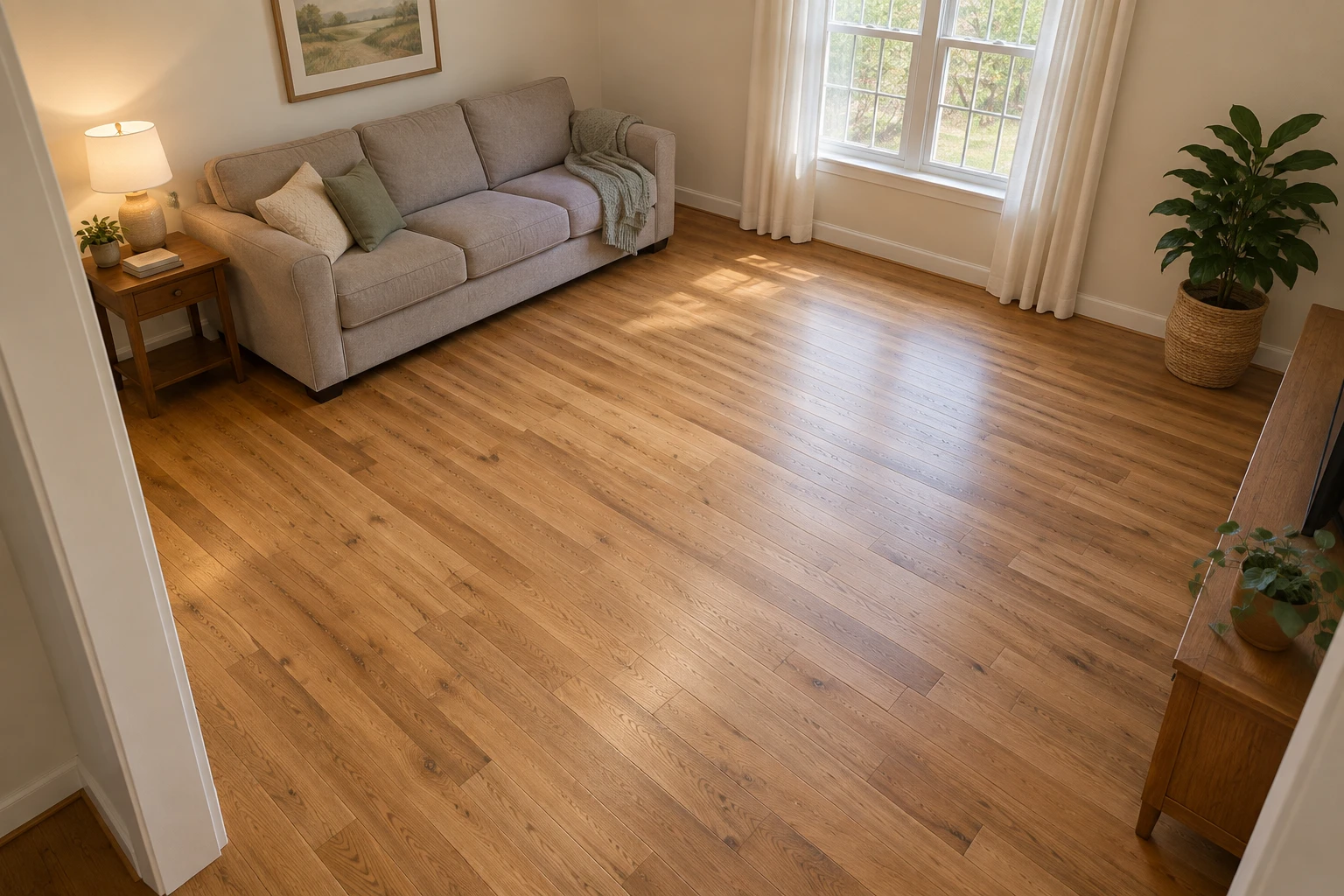
Hardwood flooring is real wood milled into boards that are nailed, glued or floated over your subfloor. It’s one of the few floors that can be sanded and refinished, so a well-installed hardwood floor can last for generations and change color as your style does.
In the Pacific Northwest, moisture is the main thing to plan around. Seasonal humidity makes wood expand and shrink, so subfloor moisture checks, acclimation and the right product matter as much as the boards themselves.
At a glance
- Water resistance
- Low. Wipe up spills quickly.
- Scratch resistance
- Moderate. Depends on the wood species and finish.
- Feel underfoot
- Warm, solid and natural.
- Typical lifespan
- Decades. Solid hardwood can be refinished many times.
- Can be refinished
- Yes. Engineered hardwood depends on its wood layer.
- Install time
- A few days for most projects, plus time to acclimate.
Solid vs. engineered hardwood
Solid hardwood
One piece of wood, usually ¾" thick. It can be sanded and refinished many times. Best over wood subfloors above ground level; not recommended over concrete or in basements.
Engineered hardwood
A real wood top layer bonded to a plywood or composite core. It’s more stable when humidity changes and can go over concrete or radiant heat (check the product). How often it can be refinished depends on the thickness of the top layer.
Prefinished vs. site-finished
Prefinished boards arrive sealed and can be walked on right after installation. Site-finished floors are sanded and coated in place for a seamless surface and a custom stain color, but need several days for the finish to dry.
Where hardwood works
| Living and dining rooms | Great fit | The classic place for hardwood. |
|---|---|---|
| Bedrooms | Great fit | Light traffic keeps the finish looking new longer. |
| Hallways and stairs | Good fit | Traffic lanes show wear over time; a recoat restores them. |
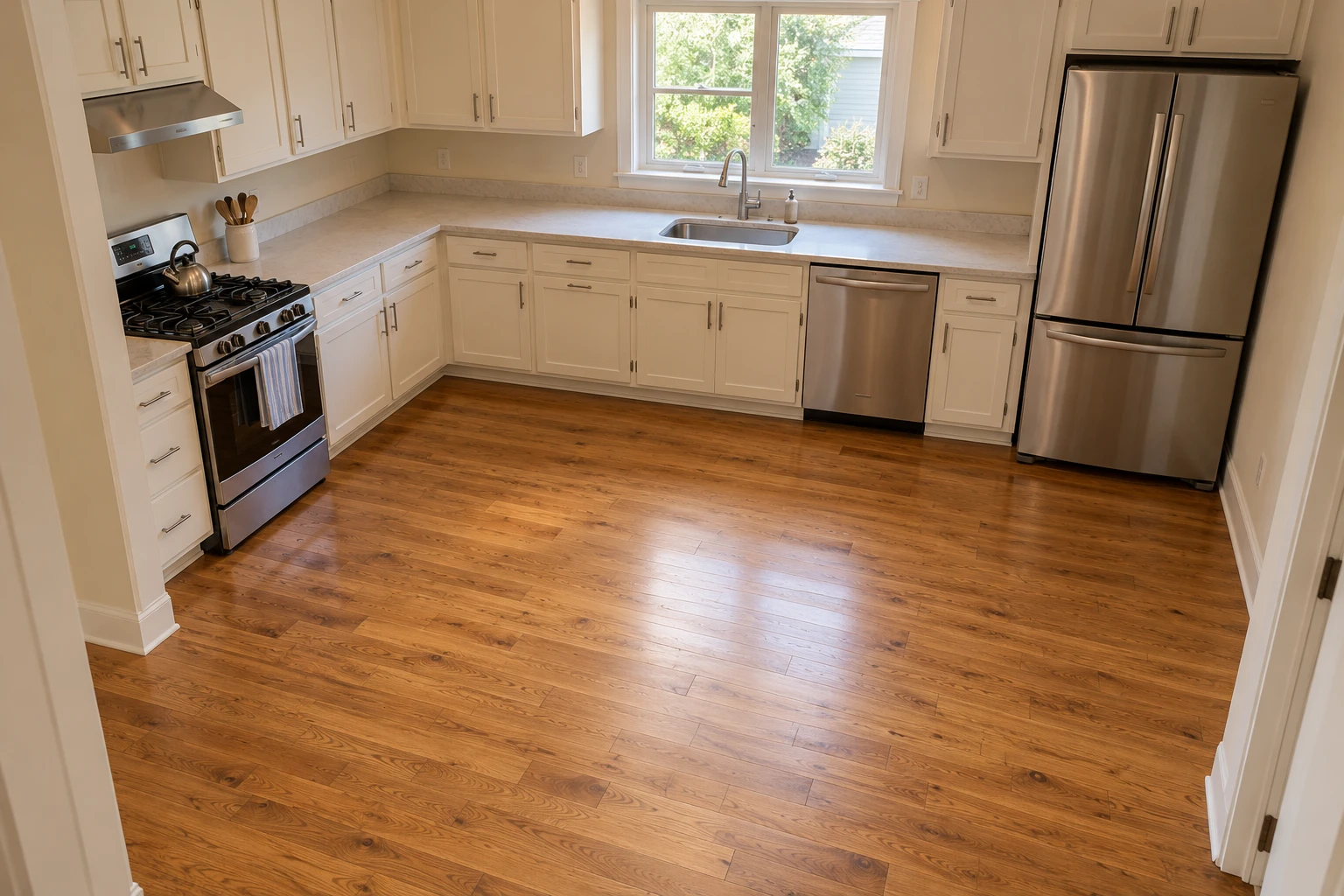
| Kitchens | Good fit | Works with care: wipe spills quickly and use a mat at the sink. |
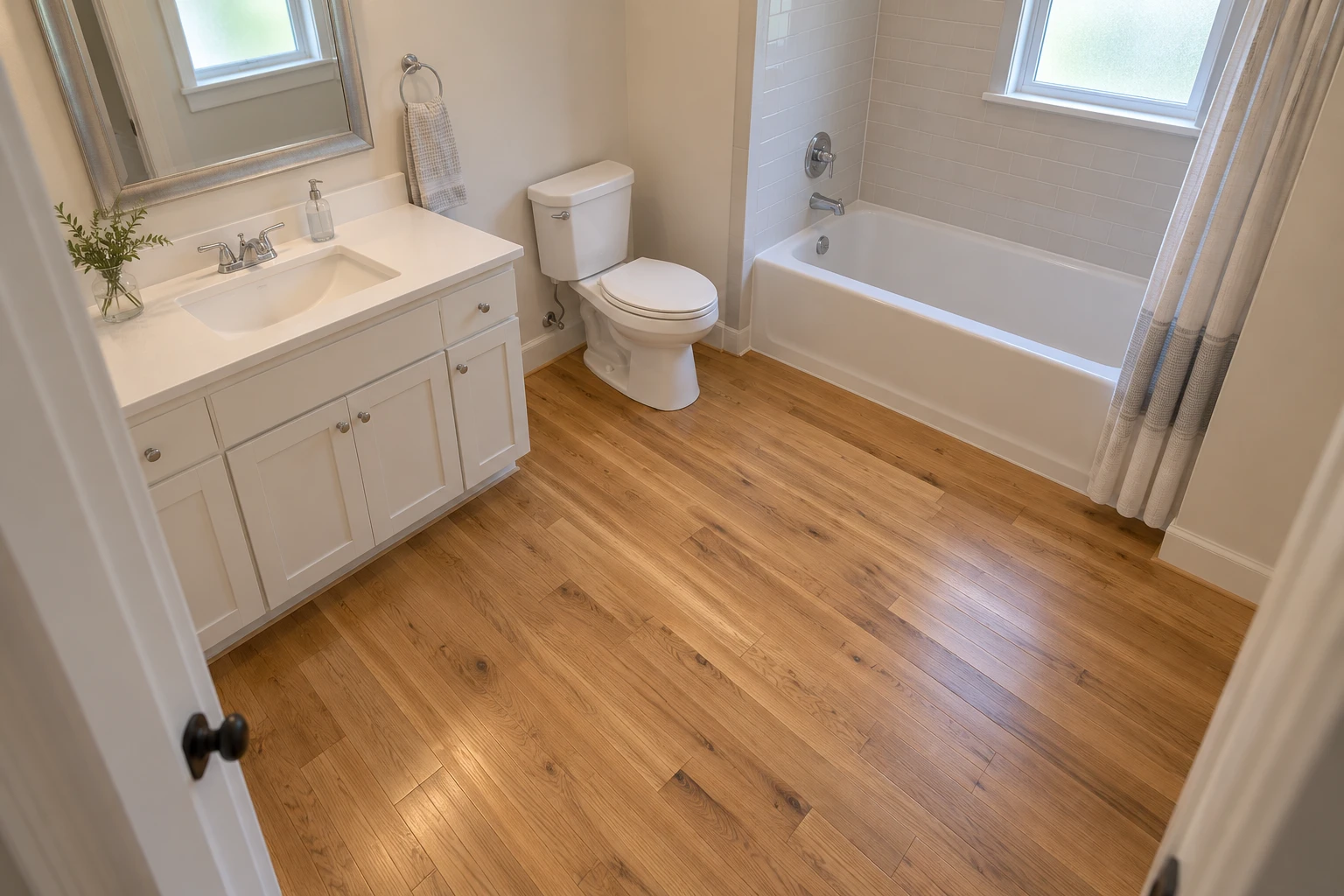
| Bathrooms and laundry rooms | Not recommended | Standing water and humidity can cup and stain boards. |
| Basements | Not recommended | Consider engineered hardwood or luxury vinyl below ground. |
Pros and cons
Pros
- Real wood look and feel that doesn’t go out of style
- Can be sanded and refinished instead of replaced
- Adds lasting value buyers recognize
- Easy to keep clean with a broom or dry mop
Cons
- Scratches and dents, especially with large dogs
- Sensitive to water and big humidity swings
- Higher upfront cost than vinyl or laminate
- Longer project, especially if finished on site
What affects the cost
Every project is priced after your rooms are reviewed. These are the factors that move the number most.
- Size and layout
- More rooms, closets, angles and doorways add cutting and labor.
- Species and grade
- Oak is the most common and affordable. Exotic species, wide planks and clear grades cost more.
- Solid or engineered
- Along with board thickness and whether it’s prefinished or finished on site.
- Removing the old floor
- Tearing out carpet, tile or glued-down flooring adds time and disposal.
- Subfloor repairs
- Leveling, fixing squeaks or replacing damaged sections before installation.
- Stairs and trim
- Stair treads, nosing, baseboards and transitions are priced separately from flat floor.
Step by step
Measure and assess
Rooms are measured and the subfloor is checked for flatness, squeaks and moisture. This decides the product, the installation method and the quote.
Deliver and acclimate
Boards are delivered and left to adjust to your home’s temperature and humidity, following the manufacturer’s instructions.
Remove and prepare
The old floor comes up. The subfloor is fastened, flattened and cleaned, and underlayment or a moisture barrier goes down where required.
Install
Boards are laid out to blend color and stagger seams, then nailed, glued or floated depending on the product, with an expansion gap at the walls.
Trim and walkthrough
Baseboards, transitions and thresholds go in, the space is cleaned, and you get care instructions for your new floor.
How to prepare
- Clear furniture and anything stored on the floor, including closets.
- Take fragile items off nearby walls and shelves; nailing causes vibration.
- Keep your heating or cooling running normally so the wood acclimates to everyday conditions.
- Plan for pets and kids to stay out of the work area.
- Expect noise and some dust, especially while the old floor is removed.
Care and maintenance
- Sweep or dry-mop often. Grit is what scratches the finish.
- Use a cleaner made for your finish. Avoid steam mops and soaking-wet mops.
- Put felt pads on furniture legs and rugs at entries.
- Keep indoor humidity steady, roughly 35–55%, to limit gaps and cupping.
- Plan a light recoat every few years in busy areas to refresh the finish.
Inspiration
Frequently asked questions
- Solid or engineered hardwood: which should I choose?
- Solid hardwood is one piece of wood and can be refinished many times. Engineered hardwood handles humidity better and can go over concrete. Above ground on a wood subfloor, either works; in basements or over concrete, engineered is the safer pick.
- Can hardwood go in a kitchen?
- Many homeowners love hardwood in the kitchen. Spills need wiping up quickly, and a rug at the sink helps. If you want something more water-tolerant, luxury vinyl is worth a look.
- How soon can I walk on new hardwood?
- Prefinished boards can usually be walked on right after installation. Site-finished floors need time for each coat to dry and cure, so plan on several days. Your quote will include the timeline.
- Will my hardwood floor get gaps in winter?
- Small seasonal gaps are normal in dry heating months and usually close again in summer. Keeping indoor humidity steady keeps them to a minimum.
- Can hardwood go over concrete?
- Solid hardwood generally shouldn’t. Engineered hardwood can be glued down or floated over concrete after a moisture test, with a moisture barrier where the manufacturer requires it.
Ready to talk about your floors?
Send room photos or a few details and your project will be reviewed before anything is priced. No obligation.