
Overview
Tile floors are set in mortar on a rigid base and finished with grout. Porcelain and ceramic are the most common choices for homes; natural stone such as slate or marble is also an option with extra care.
Tile is waterproof, very durable and easy to clean, which makes it a favorite for bathrooms, kitchens and entries. Most tile problems, like cracked tiles and loose grout, come from the base underneath, so preparation is the biggest part of the job.
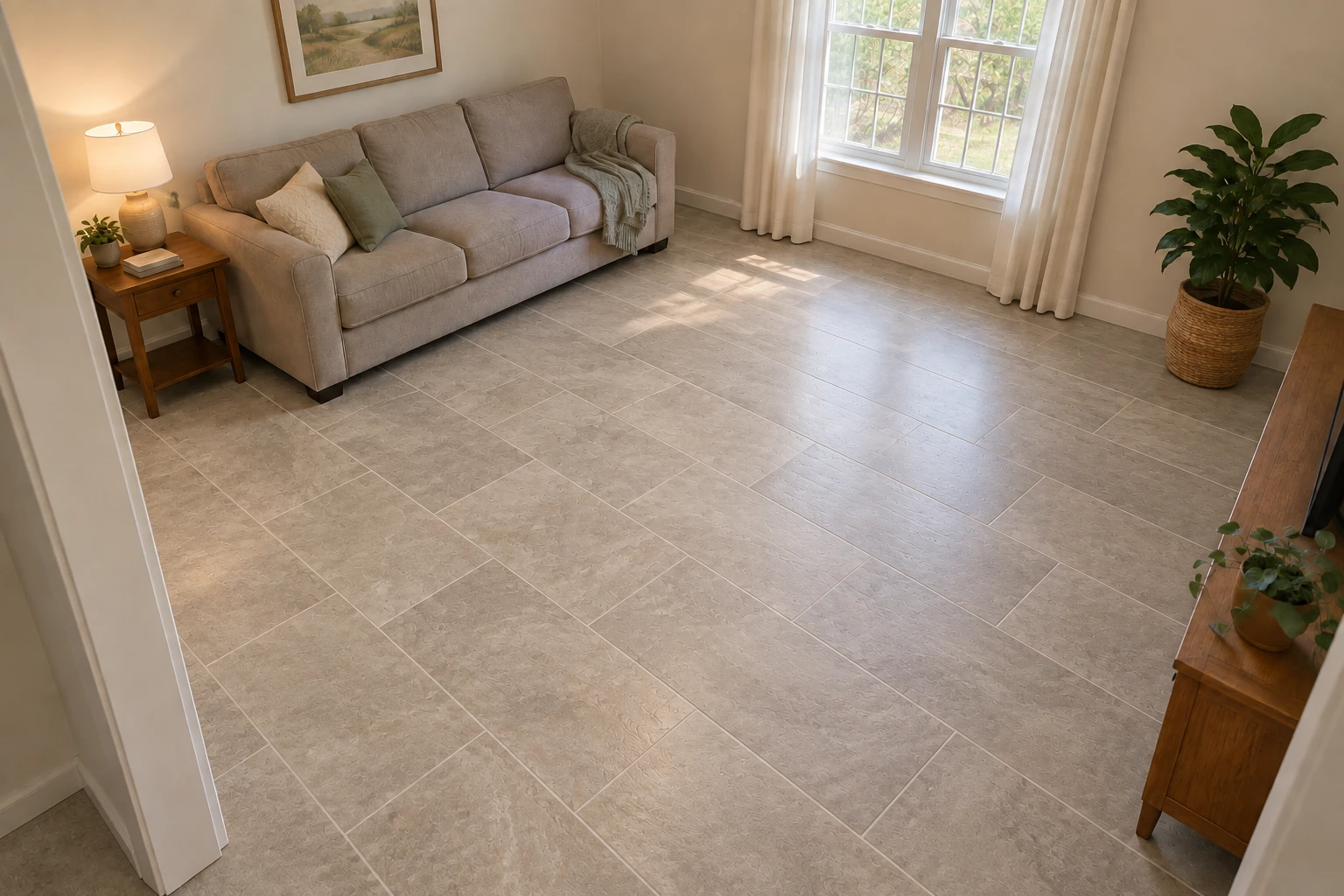
At a glance
- Water resistance
- Excellent, with properly installed and sealed grout.
- Scratch resistance
- Excellent.
- Feel underfoot
- Hard and cool. Pairs well with radiant floor heat.
- Typical lifespan
- 50+ years when installed well.
- Can be refreshed
- Grout can be cleaned, resealed or replaced.
- Install time
- Longer than floating floors, because mortar and grout need to cure.
Choosing tile
Porcelain
Dense and very low in water absorption, so it’s tough and works almost anywhere, including entries and basements.
Ceramic
A little softer and usually less expensive. Great for bathrooms and low-traffic floors.
Natural stone
Marble, slate and travertine are beautiful but more porous. They need sealing and gentler cleaners.
Large-format tile
Tiles 15" and larger mean fewer grout lines, but need a flatter floor to avoid uneven edges between tiles.
Where tile works
| Bathrooms | Great fit | Waterproof and easy to clean. |
|---|---|---|
| Kitchens | Great fit | Very durable, though hard on dropped dishes. |
| Entries and mudrooms | Great fit | Handles wet shoes, grit and heavy traffic. |
| Laundry rooms | Great fit | Stands up to leaks and moisture. |
| Living areas | Good fit | Comfortable with rugs or radiant heat. |
| Bedrooms | Good fit | Cool and hard underfoot; many prefer a warmer floor. |
Pros and cons
Pros
- Waterproof and easy to clean
- Extremely durable and long-lasting
- Huge range of looks, sizes and patterns
- Works well with radiant floor heating
Cons
- Hard and cold underfoot
- Longest installation time of the common floors
- Grout needs occasional cleaning and sealing
- Can crack if the base underneath flexes
What affects the cost
Every project is priced after your rooms are reviewed. These are the factors that move the number most.
- Size and layout
- Small rooms with many cuts take longer per square foot than open areas.
- Tile material and size
- Porcelain, natural stone and large-format tiles cost more to buy and to set.
- Pattern
- Herringbone, diagonal and mixed patterns need more cutting and more tile.
- Base preparation
- Backer board, an uncoupling membrane or leveling compound may be needed.
- Removing the old floor
- Old tile is slow, heavy and dusty to remove.
- Extras
- Heating mats, thresholds and tile baseboards.
Step by step
Assess the floor
The subfloor is checked for flex, flatness and moisture. A floor that bounces will crack tile and grout.
Remove and prepare
The old floor comes up. Backer board or an uncoupling membrane goes down, and low spots are leveled.
Lay out the pattern
Tiles are dry-laid and the layout is centered so full tiles land in the most visible spots and cuts fall at the edges.
Set the tile
Each tile is set in mortar with full coverage underneath and leveled with its neighbors.
Grout and seal
Once the mortar cures, joints are grouted. Cement-based grout is sealed to resist stains.
How to prepare
- Clear furniture and anything stored on the floor.
- In bathrooms, the toilet comes off so tile runs underneath it.
- Plan for the room to be out of use for several days while mortar and grout cure.
- Removing old tile is loud and dusty; close off nearby rooms.
- Keep foot traffic off new tile until you’re told it’s ready.
Care and maintenance
- Sweep and mop with a pH-neutral cleaner.
- Avoid bleach and acidic cleaners on grout and natural stone.
- Reseal cement-based grout every year or two.
- Wipe spills on natural stone quickly to prevent stains.
- Use felt pads under furniture to protect the glaze.
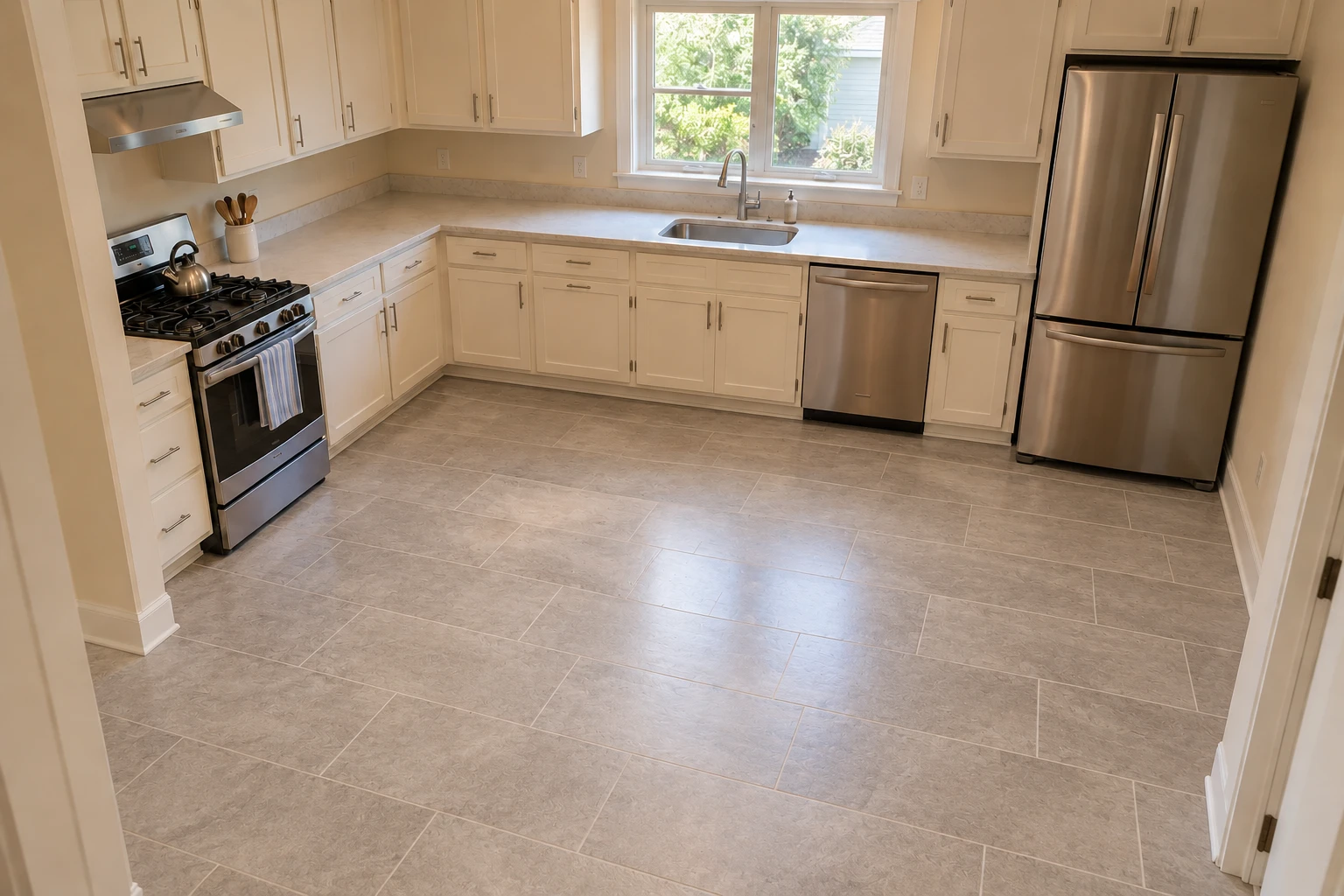
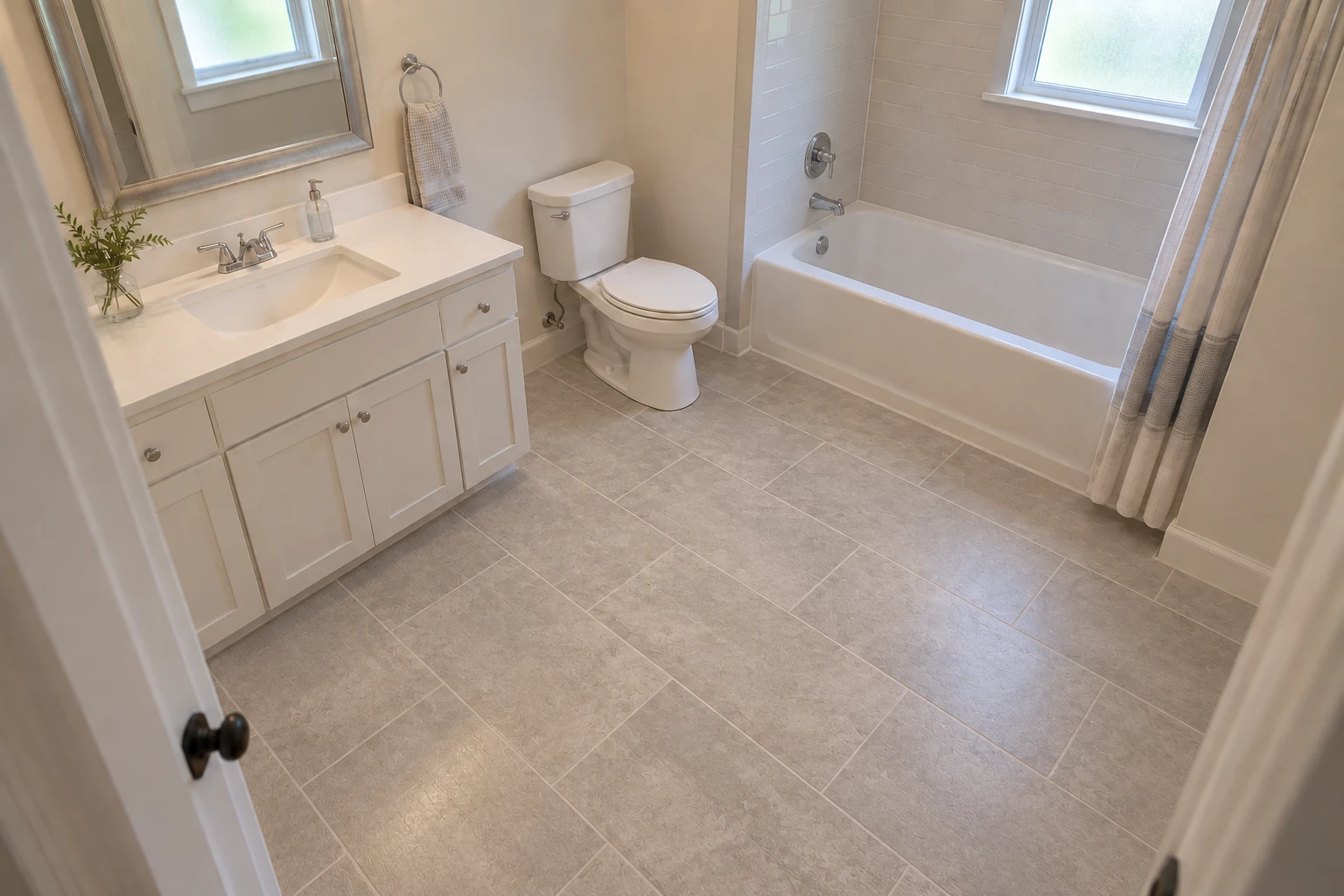
Inspiration
Frequently asked questions
- Porcelain or ceramic?
- Porcelain is denser and absorbs less water, so it’s tougher and works almost anywhere. Ceramic is a little softer, usually costs less, and is great for bathrooms.
- How long does a tile floor take?
- Longer than floating floors, because mortar and grout need time to cure between steps. Your quote will include a realistic timeline for your rooms.
- Can tile go over my old floor?
- Sometimes, but the old floor usually comes up so the base can be checked and prepared properly. That’s what keeps tile from cracking later.
- Can tile go over radiant floor heat?
- Yes. Tile is one of the best floors for radiant heat. Electric heating mats are set in the mortar during installation, so plan for them from the start.
- What is an uncoupling membrane?
- A thin membrane between the subfloor and the tile that absorbs small movements, which helps prevent cracked tile and grout. It’s common over wood subfloors.
Ready to talk about your floors?
Send room photos or a few details and your project will be reviewed before anything is priced. No obligation.