
Overview
Laminate is a layered floor: a high-density fiberboard core, a photographic layer that looks like wood or stone, and a hard, clear wear layer on top. The planks click together and float over an underlayment.
It’s one of the most scratch-resistant floors you can buy, and usually one of the most affordable. Its weak spot is water: the core is wood-based, so water that sits on it can make it swell.
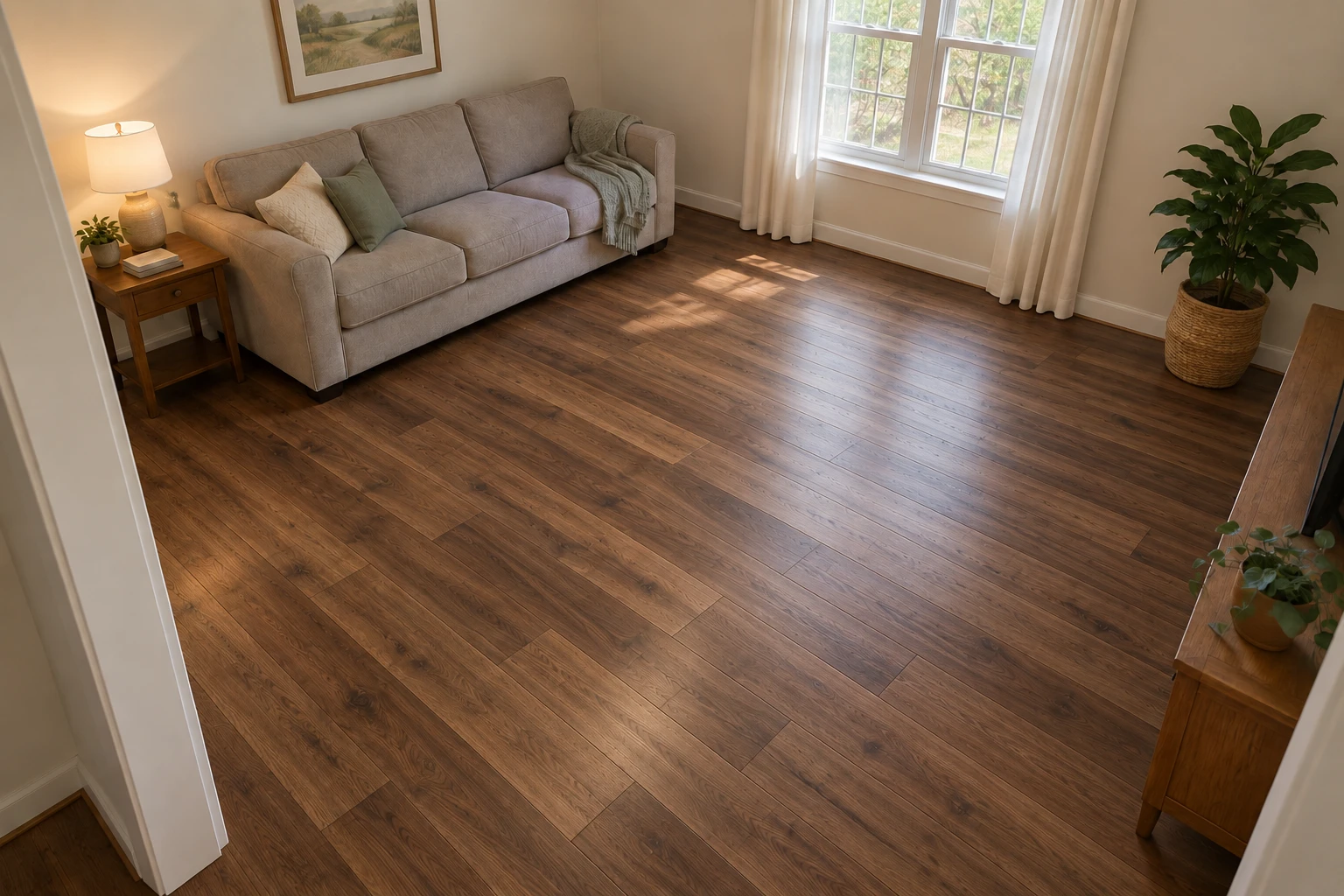
At a glance
- Water resistance
- Moderate. Newer products resist spills for hours, not standing water.
- Scratch resistance
- Very good. Check the AC rating.
- Feel underfoot
- Firm. Good underlayment keeps it from sounding hollow.
- Typical lifespan
- 15–25 years.
- Can be refinished
- No. Damaged planks are replaced.
- Install time
- Often 1–3 days for several rooms.
What to compare
AC rating
An abrasion rating from AC1 to AC5. AC3 suits most homes; AC4 holds up better to heavy traffic, pets and home offices.
Water-resistant laminate
Newer lines seal the core and joints so spills can sit for hours without damage. Still not a substitute for vinyl in a bathroom.
Thickness and underlayment
Thicker planks (10–12 mm) feel more solid. Underlayment, attached or separate, cuts noise; a moisture barrier is needed over concrete.
Where laminate works
| Living rooms and bedrooms | Great fit | A wood look on a smaller budget. |
|---|---|---|
| Hallways and home offices | Great fit | Shrugs off traffic and chair wheels. |
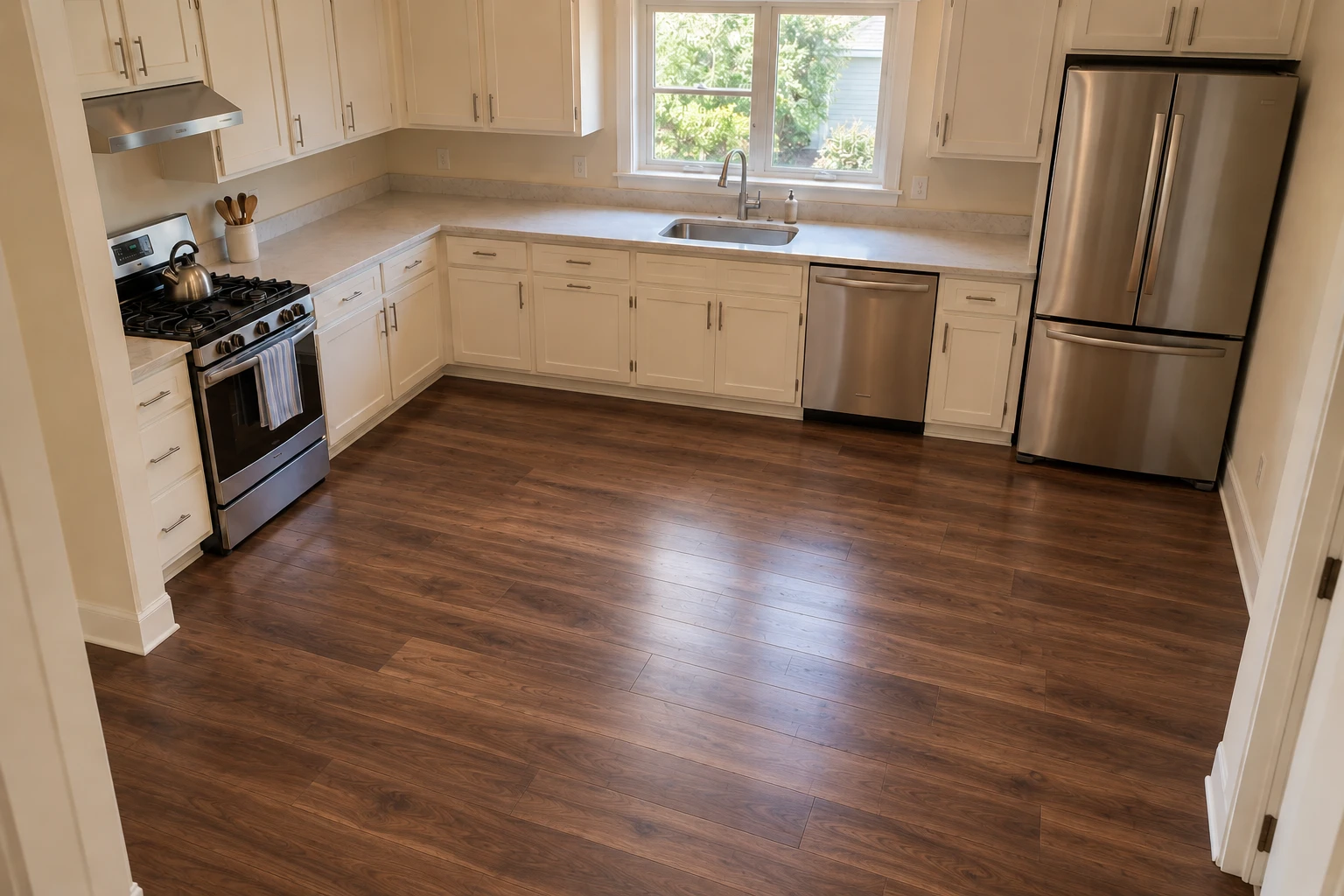
| Kitchens | Good fit | Choose a water-resistant line and wipe spills promptly. |
| Basements | Good fit | Over concrete with a moisture check and barrier. |
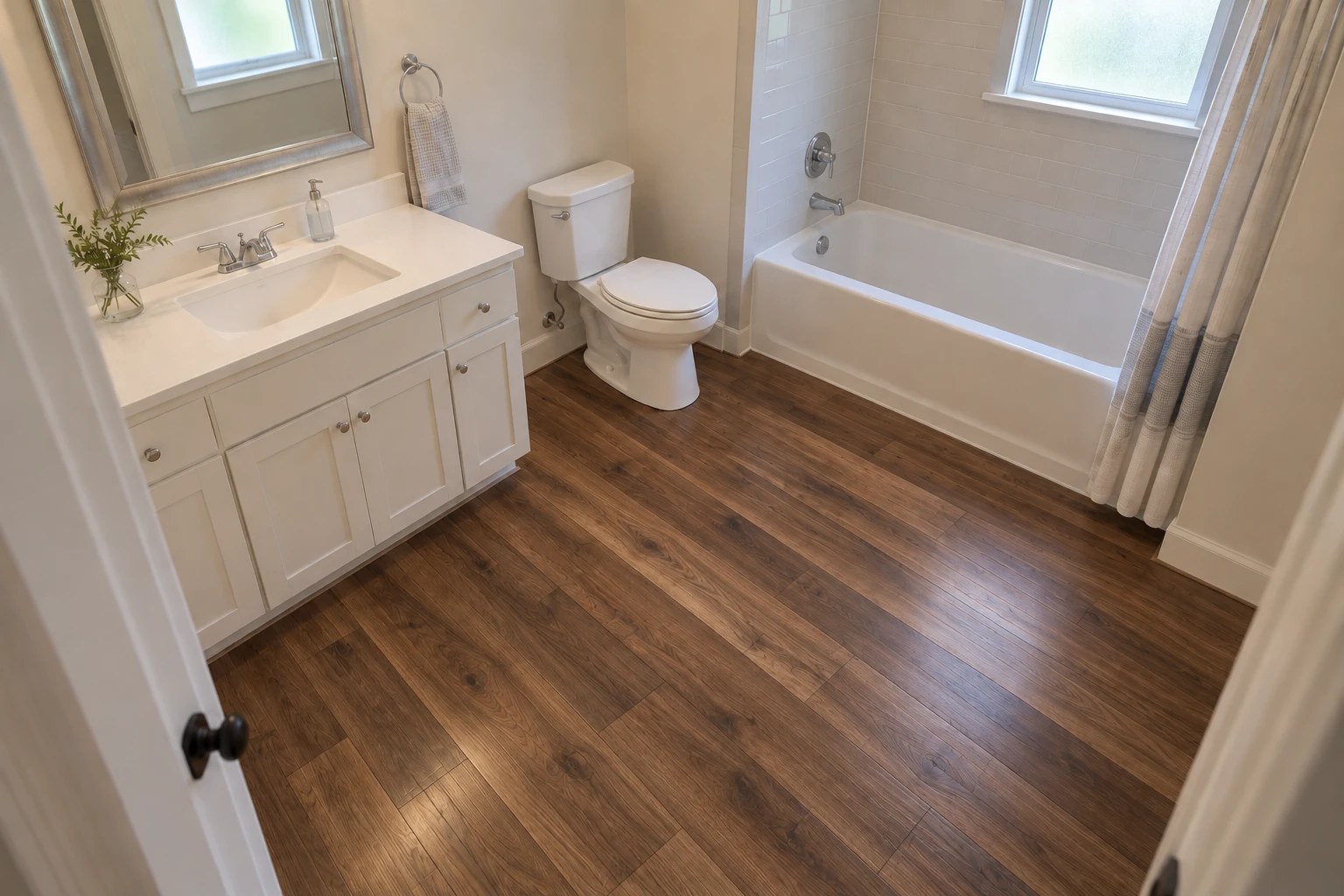
| Bathrooms and laundry rooms | Not recommended | Standing water can swell the core. |
Pros and cons
Pros
- Excellent scratch resistance
- Usually costs less than hardwood and many vinyl products
- Realistic wood and stone looks
- Quick, clean floating installation
Cons
- Can swell if water sits on it
- Can’t be sanded or refinished
- Can sound hollow without good underlayment
- Feels harder underfoot than vinyl or carpet
What affects the cost
Every project is priced after your rooms are reviewed. These are the factors that move the number most.
- Size and layout
- More rooms, closets and angles add cutting and labor.
- Product quality
- AC rating, thickness and water resistance all affect price.
- Underlayment
- Better underlayment costs a little more and makes the floor quieter.
- Subfloor prep
- Floating floors need a flat base; dips and humps are fixed first.
- Removing the old floor
- Carpet, tile or glued-down flooring each take different amounts of time.
- Stairs and trim
- Stair nosing, baseboards and transitions between rooms.
Step by step
Measure and check the subfloor
Rooms are measured and the subfloor is checked for flatness and moisture.
Acclimate
Boxes sit in the rooms before installation, usually around 48 hours, per the manufacturer’s instructions.
Prepare and lay underlayment
The old floor comes up, low spots are filled, and underlayment (plus a moisture barrier over concrete) goes down.
Install
Planks click together and float with an expansion gap at the walls. Door casings are undercut so planks slide underneath.
Trim and walkthrough
Baseboards and transitions cover the expansion gap, the space is cleaned, and you get care instructions.
How to prepare
- Clear furniture and anything stored on the floor, including closets.
- Leave the boxes in the rooms where they’re delivered so they can acclimate.
- Keep your heating or cooling running normally before and during installation.
- Plan for pets and kids to stay out of the work area.
- Expect noise during removal and cutting.
Care and maintenance
- Sweep or vacuum regularly.
- Clean with a barely damp mop and a laminate cleaner. Never wet-mop or steam.
- Wipe up spills promptly, especially along seams.
- Use felt pads on furniture and mats at entries.
- Avoid wax and polish; they leave a film.
Inspiration
Frequently asked questions
- Is laminate water-resistant?
- Many newer laminates resist spills for hours, but the core is still wood-based. Standing water and leaks can make it swell, so luxury vinyl is usually the better pick for bathrooms.
- Will laminate scratch?
- Laminate has a hard wear layer that resists scratches from pets and furniture better than many floors. Felt pads on chair legs still help.
- Laminate or hardwood?
- Hardwood is real wood, lasts longer and can be refinished. Laminate costs less and stands up to scratches better. If budget matters most, laminate gives you the look for less.
- Why does some laminate sound hollow?
- Floating floors can sound clicky over an uneven base or thin underlayment. A flat subfloor and quality underlayment make it sound and feel much more solid.
- Can laminate go on stairs?
- Yes, with matching stair nosing. It takes much more labor than flat floors, and stair pieces are glued rather than floated.
Ready to talk about your floors?
Send room photos or a few details and your project will be reviewed before anything is priced. No obligation.